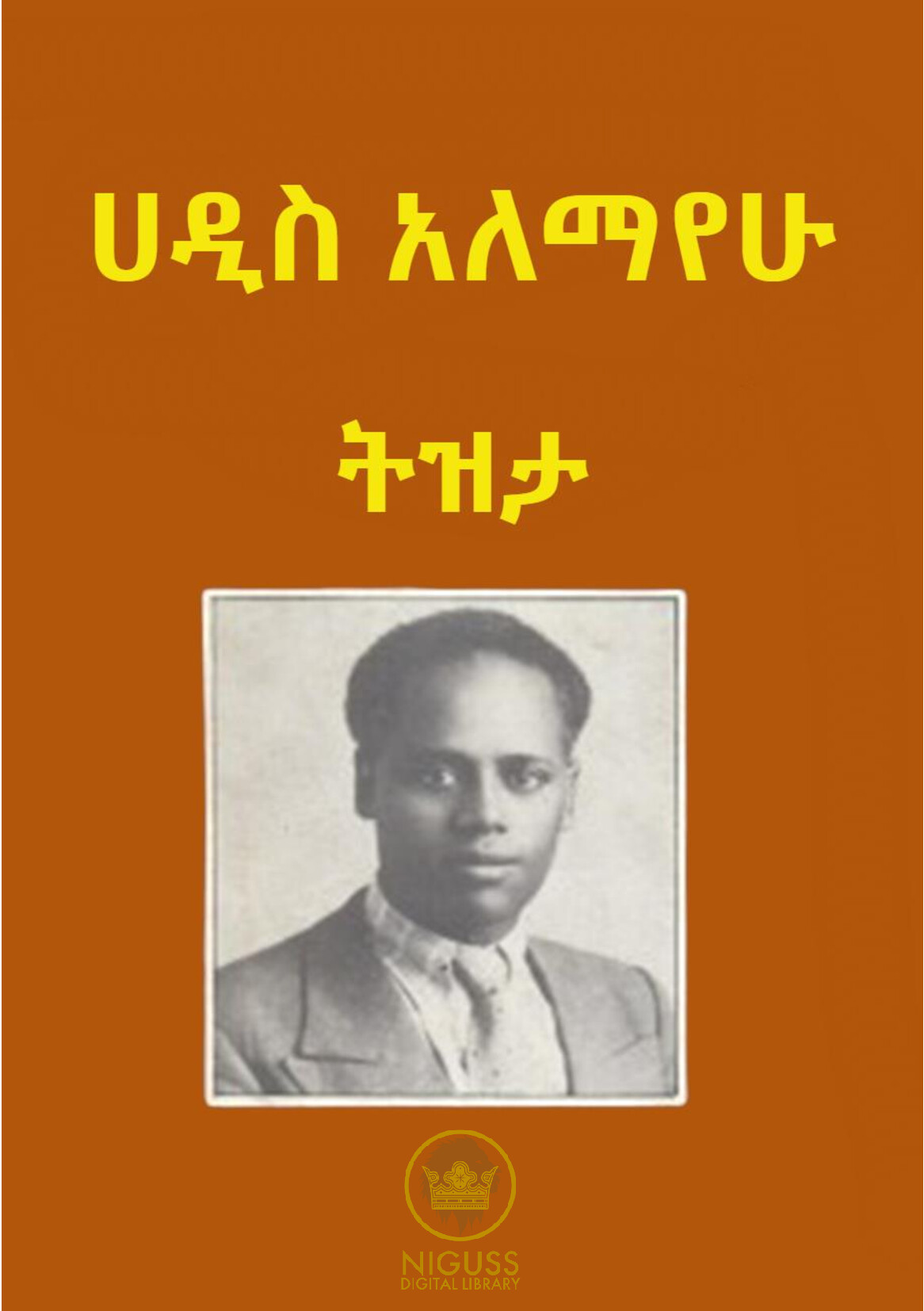
Honorable Dr. Haddis Alemayehu (October 15, 1910 – December 6, 2003) was a monumental Ethiopian statesman, diplomat, and arguably the greatest novelist in the history of Amharic literature. Writing under the pen name Haddinko, he authored Fəqər əskä Mäqabər (ፍቅር እስከ መቃብር — "Love to the Grave"), universally recognized as the absolute masterpiece and definitive classic of modern Ethiopian fiction.
Quick Facts
-------------------------------------------------
- Born: October 15, 1910, in Debre Markos, Gojjam, Ethiopia
- Died: December 6, 2003 (aged 93) in Addis Ababa, Ethiopia
- Education: Church education in Ge'ez, Qene, and Scripture Interpretation
- Political Peak: Served as Ethiopia's Minister of Foreign Affairs (1960–1961)
Key Historical & Literary Contributionss
-------------------------------------------------
1. Spiritual Roots and Anti-Colonial Resistance
-------------------------------------------------
Born into a traditional Orthodox Christian priesthood family, Haddis spent his early years mastering Ge'ez, liturgical music, and theological poetry (Qene) across various northern monasteries. When fascist Italy invaded Ethiopia in 1935, he joined the Ethiopian patriot resistance to defend national sovereignty. He was eventually captured by Italian forces and spent seven grueling years interned as a political prisoner on the island of Ponza in Italy.
2. Diplomatic and Ministerial Service
-------------------------------------------------
Following Ethiopia's liberation in 1941, his rare combination of deep local knowledge and high-level intellect positioned him at the center of Emperor Haile Selassie's administration. He entered public service, rising rapidly from Director-General of Foreign Affairs to become Ethiopia's permanent representative to the United Nations. In 1960, he was officially appointed Minister of Foreign Affairs. He also served as the Ethiopian Ambassador to Great Britain and later as Minister of Planning and Development.
3. Love to the Grave and Literary Masterpieces
-------------------------------------------------
Haddis Alemayehu's bibliography contains the most influential texts in modern Amharic history:
- Fəqər əskä Mäqabər (ፍቅር እስከ መቃብር — 1968): His absolute masterpiece. Set in the feudal landscape of rural Gojjam, the novel tells the tragic, star-crossed love story of Seblewongel (a high-born noblewoman) and Bezabih (a humble church school teacher). Beyond a romance, the book is a fierce, layered social critique attacking structural classism, religious hypocrisy, and the suffocating bonds of the feudal system. It remains mandatory reading in Ethiopian high schools.
- Wanjalañña Dañña (ወንጀለኛው ዳኛ — "The Criminal Judge", 1981): Another highly celebrated social novel examining justice, corruption, moral duty, and the flaws within legal institutions.
- Yalm Žat (የልም ዣት — "Dream's Illusion"): A major novel continuing his hallmark tradition of exploring generational clashes and political evolution.
- Tezita (ትዝታ — "Remembrance"): An invaluable personal memoir providing a detailed history of the Italian war and his experiences in captivity.
4. Survival and Final Legacy
-------------------------------------------------
When the monarchy was overthrown in 1974 by the Marxist Derg military regime, most elite imperial officials were executed or purged. However, because Love to the Grave had so brilliantly exposed the corruption of the old feudal system, Haddis was highly respected by revolutionaries and ordinary citizens alike. He survived the purges, and in 1999, Addis Ababa University awarded him an honorary doctorate to honor his titanic contributions to the country's national heritage.