
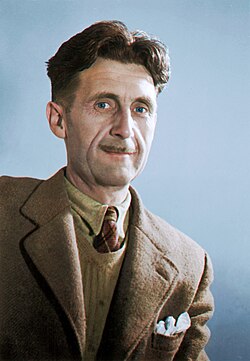
George Orwell
- Nationality British
- Birth Date
- Books 0 books
Biography
George Orwell (June 25, 1903 – January 21, 1950) was the pen name of Eric Arthur Blair, a legendary English novelist, essayist, journalist, and social critic. He is universally recognized as one of the 20th century's most prophetic voices, famous for his sharp critiques of totalitarianism, systemic surveillance, and the manipulation of political language.
Quick Facts
-------------------------------------------------
-Born: June 25, 1903, in Motihari, Bengal, British India
-Died: January 21, 1950 (aged 46) in London, England
-Education: Eton College
-Key Concept: "Orwellian"—a term used to describe brutal totalitarian practices, mass surveillance, and state-engineered disinformation.
Key Historical & Literary Phases
-------------------------------------------------
1. Rejecting Imperialism and Choosing Poverty
-------------------------------------------------
Born into the British colonial establishment, Blair initially followed a traditional path, working as an imperial police officer in Burma (now Myanmar) from 1922 to 1927. However, witnessing the "dirty work of Empire" firsthand sparked a lifelong hatred for imperialism. He resigned and chose to live in voluntary poverty in Paris and London, working as a dishwasher and wandering alongside tramps. He published these raw experiences in his 1933 debut book, Down and Out in Paris and London, officially debuting his famous pen name, George Orwell.
2. The Spanish Civil War and Political Awakening
-------------------------------------------------
In late 1936, Orwell traveled to Spain to fight for the Republican faction against Francisco Franco's fascist forces. While fighting on the front lines, he was shot through the throat by a sniper. More profoundly, he witnessed how Soviet-backed communist factions betrayed and hunted his fellow democratic socialists. This experience, captured in his masterpiece Homage to Catalonia (1938), solidified his fierce, lifelong commitment to democratic socialism and turned him into an absolute enemy of Soviet Communism.
3. Masterworks for your Library Collection
-------------------------------------------------
For the Niguss Library records, Orwell's final two novels are among the most influential pieces of fiction ever printed:
- Animal Farm (1945): A brilliant, satirical allegorical novella that uses a farmyard revolution to depict Joseph Stalin’s betrayal of the 1917 Russian Revolution. It exposes how easily revolutionary ideals can be corrupted by power.
- Nineteen Eighty-Four (1949): His definitive dystopian masterpiece. Written while he was dying of tuberculosis on a remote Scottish island, the novel introduced foundational concepts like Big Brother, The Thought Police, Newspeak, and Doublethink. It serves as a terrifying, timeless warning about total state control over private life and truth.
Books By George Orwell
This author has no library items yet.